特惠-27考研
早鸟-28考研课
双证硕士:在线咨询
免联考-同等学力
在职研:1对1答疑
新东方考研Ai择校
考研英语水平测试
计算机考研:择校备考包
法硕:择校备考大礼包
保研-路线图
必备:考研招简大合集
考研备考:重点复习资料
27考研-新大纲对比
扫码加入训练营
牢记核心词
学习得礼盒
SAMPLE 4
[考古学类]
Archaeology as a profession faces two major problems. First, it is the poorest of the poor. Only paltry sums are available for excavating and even less is available for publishing the results and preserving the sites once excavated. Yet archaeologists deal with priceless objects every day. Second, there is the problem of illegal excavation, resulting in museum-quality pieces being sold to the highest bidder.
I would like to make an outrageous suggestion that would at one stroke provide funds for archaeology and reduce the amount of illegal digging. I would propose that scientific archeological expeditions and governmental authorities sell excavated artifacts on the open market. Such sales would provide substantial funds for the excavation and preservation of archaeological sites and the publication of results. At the same time, they would break the illegal excavator’s grip on the market, thereby decreasing the inducement to engage in illegal activities.
You might object that professionals excavate to acquire knowledge, not money. Moreover, ancient artifacts are part of our global cultural heritage, which should be available for all to appreciate, not sold to the highest bidder. I agree. Sell nothing that has unique artistic merit or scientific value. But, you might reply, everything that comes out of the ground has scientific value. Here we part company. Theoretically, you may be correct in claiming that every artifact has potential scientific value. Practically, you are wrong.
I refer to the thousands of pottery vessels and ancient lamps that are essentially duplicates of one another. In one small excavation in Cyprus, archaeologists recently uncovered 2,000 virtually indistinguishable small jugs in a single courtyard. Even precious royal seal impressions known as melekh handles have been found in abundance — more than 4,000 examples so far.
The basements of museums are simply not large enough to store the artifacts that are likely to be discovered in the future. There is not enough money even to catalogue the finds; as a result, they cannot be found again and become as inaccessible as if they had never been discovered. Indeed, with the help of a computer, sold artifacts could be more accessible than are the pieces stored in bulging museum basements. Prior to sale, each could be photographed and the list of the purchasers could be maintained on the computer. A purchaser could even be required to agree to return the piece if it should become needed for scientific purposes.
It would be unrealistic to suggest that illegal digging would stop if artifacts were sold on the open market. But the demand for the clandestine product would be substantially reduced. Who would want an unmarked pot when another was available whose provenance was known, and that was dated stratigraphically by the professional archaeologist who excavated it?
1. The primary purpose of the text is to propose
[A] an alternative to museum display of artifacts.
[B] a way to curb illegal digging while benefiting the archaeological profession.
[C] a way to distinguish artifacts with scientific value from those that have no such value.
[D] the governmental regulation of archaeological sites.
2. Which of the following is mentioned in the text as a disadvantage of storing artifacts in museum basements?
[A] Museum officials rarely allow scholars access to such artifacts.
[B] Space that could be better used for display is taken up for storage.
[C] Artifacts discovered in one excavation often become separated from each other.
[D] Such artifacts’ often remain uncatalogued and thus cannot be located once they are put in storage.
3. The author mentions the excavation in Cyprus (line 2, paragraph 4) to emphasize which of the following points?
[A] Ancient lamps and pottery vessels are less valuable, although more rare, than royal seal impressions.
[B] Artifacts that are very similar to each other present cataloguing difficulties to archaeologists.
[C] Artifacts that are not uniquely valuable, and therefore could be sold, are available in large quantities.
[D] Cyprus is the most important location for unearthing large quantities of salable artifacts.
4. The author’s argument concerning the effect of the official sale of duplicate artifacts on illegal excavation is based on which of the following assumptions?
[A] Prospective purchasers would prefer to buy authenticated artifacts.
[B] The price of illegally excavated artifacts would rise.
[C] Computers could be used to trace sold artifacts.
[D] Illegal excavators would be forced to sell only duplicate artifacts.
5. The author anticipates which of the following initial denials of his proposal?
[A] Museum officials will become unwilling to store artifacts.
[B] An oversupply of salable artifacts will result and the demand for them will fall.
[C] Artifacts that would have been displayed in public places will be sold to private collectors.
[D] Illegal excavators will have an even larger supply of artifacts for resale.
【英语阅读资料】这里有↑↑↑
 资料下载
资料下载
2014年-2025年考研历年真题汇总
发布时间:2024-04-25扫码添加【考研班主任】
即可领取资料包
考研大纲PDF电子版下载-历年(附解析)
发布时间:2024-04-25扫码添加【考研班主任】
即可领取资料包
2026年考研政数英备考资料zip压缩包
发布时间:2024-04-25扫码添加【考研班主任】
即可领取资料包
考研英语大纲词汇5500打印版(基础必备)
发布时间:2024-04-25扫码添加【考研班主任】
即可领取资料包
新东方在线考试模拟题【12套】
发布时间:2024-04-25扫码添加【考研班主任】
即可领取资料包
2026年考研专业课知识点总结
发布时间:2024-04-25扫码添加【考研班主任】
即可领取资料包
新东方考研资料下载地址
发布时间:2023-05-17新东方在线考研资料合集
下载方式:微信扫码,获取网盘链接

目录:
1.2013-2023年近10年政数英真题及解析PDF版(新东方)
2.2013-2023年专业课考试历年真题及解析PDF版
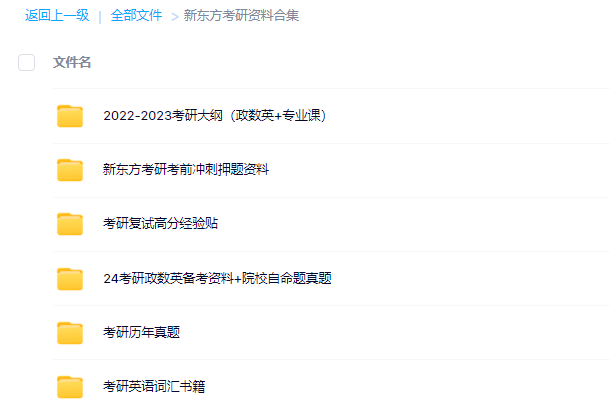
3.24考研复习备考资料大合集:大纲+备考资料+词汇书+考前押题+自命题
资料介绍:
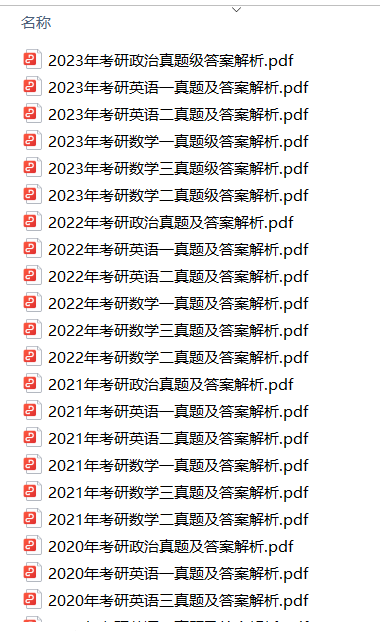
1.2013-2023年近10年政数英真题及解析PDF版(新东方)
 、
、
2.2013-2023年专业课考试历年真题及解析PDF版
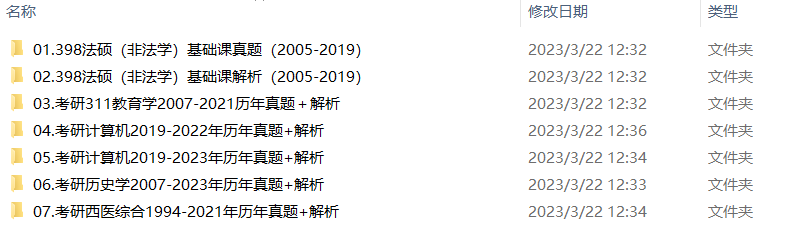
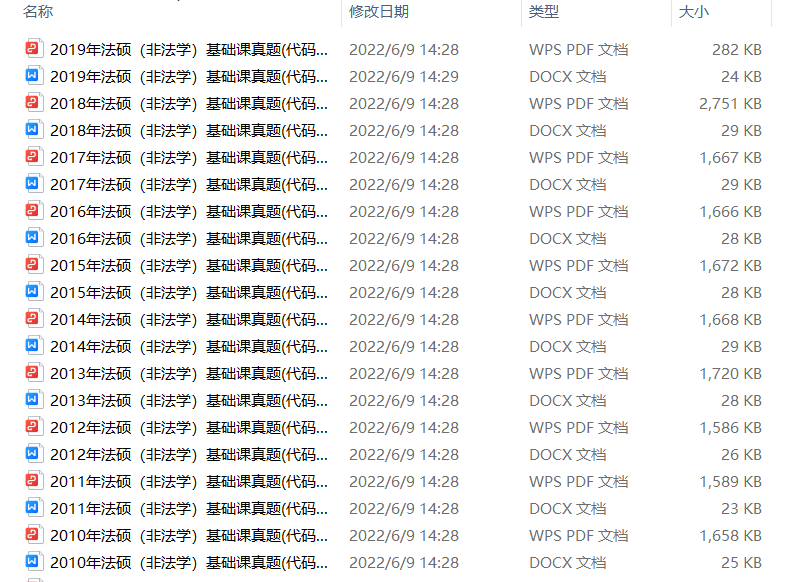
3.24考研复习备考资料大合集
3.24考研复习备考资料:考研大纲
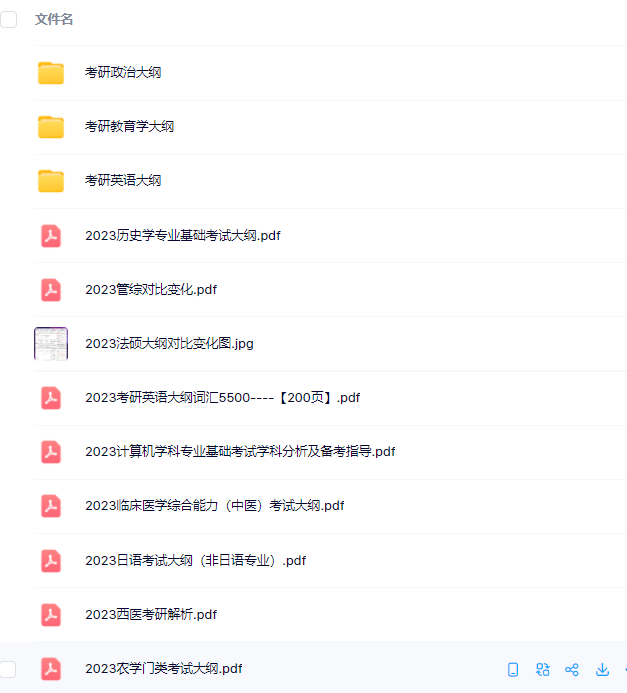
3.24考研复习备考资料:政数英备考资料+自命题真题
------------------
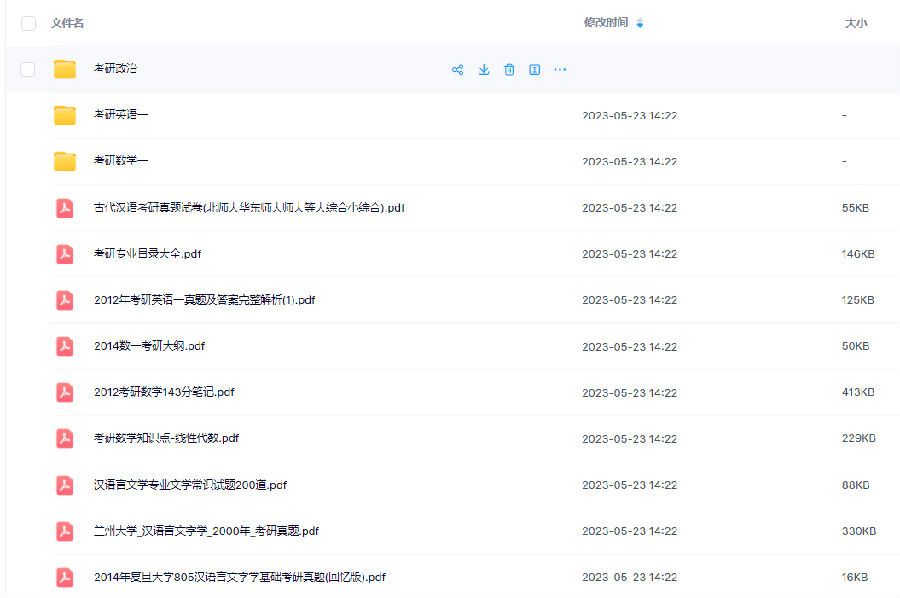
考研备考过程中,尤其是专业课部分,参考往年的考试真题,对于我们的复习有更好的帮助。北京大学考研真题资料都有哪些?小编为大家进行了汇总。

北京大学考研真题资料-公共课
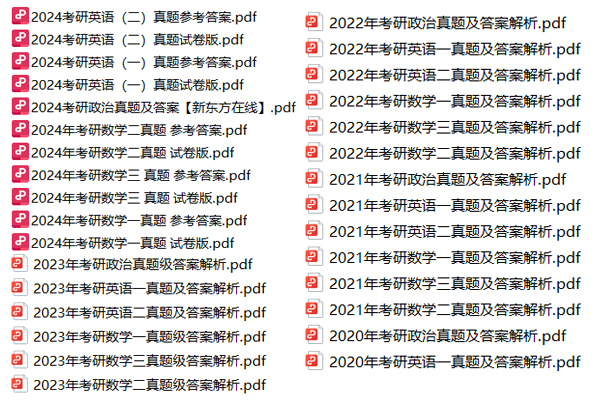
北京大学考研真题资料-专业课
以上就是关于“北京大学考研真题资料下载(历年汇总)”的整理,更多考研资料下载,请关注微信获取下载地址。
2024考研公共课必背知识点汇总
发布时间:2023-01-03扫码添加【考研班主任】
即可领取资料包
2013-2023考研历年真题汇总
发布时间:2023-01-03扫码添加【考研班主任】
即可领取资料包
考研英语大纲词汇(PDF可打印)
发布时间:2023-01-03扫码添加【考研班主任】
即可领取资料包
2024考研专业课知识点总结
发布时间:2023-01-03扫码添加【考研班主任】
即可领取资料包
2023考研政治 内部押题 PDF
发布时间:2022-11-16扫码添加【考研班主任】
即可领取资料包
徐涛:23考研预测六套卷
发布时间:2022-11-16扫码添加【考研班主任】
即可领取资料包
考研政数英冲刺资料最新整理
发布时间:2022-11-16扫码添加【考研班主任】
即可领取资料包
23考研答题卡模板打印版
发布时间:2022-11-16扫码添加【考研班主任】
即可领取资料包
2023考研大纲词汇5500PDF电子版
发布时间:2022-07-28扫码添加【考研班主任】
即可领取资料包
考研历年真题(公共课+专业课)
发布时间:2022-07-28扫码添加【考研班主任】
即可领取资料包
考研英语阅读100篇附解析及答案
发布时间:2022-01-07扫码添加【考研班主任】
即可领取资料包
新东方考研学霸笔记整理(打印版)
发布时间:2022-01-07扫码添加【考研班主任】
即可领取资料包
2001-2021年考研英语真题答案(可打印版)
发布时间:2022-01-07扫码添加【考研班主任】
即可领取资料包
考研英语词汇5500(完整版下载)
发布时间:2022-01-07扫码添加【考研班主任】
即可领取资料包
2022考研政审表模板精选10套
发布时间:2022-01-07扫码添加【考研班主任】
即可领取资料包
历年考研真题及答案 下载
发布时间:2021-12-09扫码添加【考研班主任】
即可领取资料包
考研政审表模板汇总
发布时间:2020-06-17扫码添加【考研班主任】
即可领取资料包
近5年考研英语真题汇总
发布时间:2020-06-17扫码添加【考研班主任】
即可领取资料包
考研英语大纲词汇5500
发布时间:2020-06-17扫码添加【考研班主任】
即可领取资料包
2022考研12大学科专业排名汇总
发布时间:2019-11-21扫码添加【考研班主任】
即可领取资料包
2023考研政治复习备考资料【珍藏版】
发布时间:2019-11-21扫码添加【考研班主任】
即可领取资料包
考研英语万能模板+必备词汇+范文
发布时间:2019-11-21扫码添加【考研班主任】
即可领取资料包
考研数学一、二、三历年真题整理
发布时间:2019-11-21扫码添加【考研班主任】
即可领取资料包

添加班主任领资料
添加考研班主任
免费领取考研历年真题等复习干货资料

 推荐阅读
推荐阅读
为了让考研的同学更高效地复习考研英语,新东方在线考研频道整理了“考研英语1阅读错几个后的复习计划”,考研的同学可以了解一下,希望对大家有所帮助。
为了让考研的同学更高效地复习考研英语,新东方在线考研频道整理了“考研英语二阅读篇数及题型分析”,考研的同学可以了解一下,希望对大家有所帮助。
为了让考研的同学更高效地复习考研英语,新东方在线考研频道整理了“考研英语阅读理解的总结与反思”,考研的同学可以了解一下,希望对大家有所帮助。
来源 : 网络 2025-06-13 08:02:00 关键字 : 考研英语阅读理解
为了让考研的同学更高效地复习考研英语,新东方在线考研频道整理了“提高考研英语一阅读理解的五大策略”,考研的同学可以了解一下,希望对大家有所帮助。
为了让考研的同学更高效地复习考研英语,新东方在线考研频道整理了“探索考研英语阅读文章的逻辑结构”,考研的同学可以了解一下,希望对大家有所帮助。
来源 : 网络 2025-06-12 08:03:00 关键字 : 考研英语阅读
资料下载
扫码添加【考研班主任】
即可领取资料包
扫码添加【考研班主任】
即可领取资料包
扫码添加【考研班主任】
即可领取资料包
扫码添加【考研班主任】
即可领取资料包
扫码添加【考研班主任】
即可领取资料包
扫码添加【考研班主任】
即可领取资料包
新东方在线考研资料合集
下载方式:微信扫码,获取网盘链接
目录:
1.2013-2023年近10年政数英真题及解析PDF版(新东方)
2.2013-2023年专业课考试历年真题及解析PDF版
3.24考研复习备考资料大合集:大纲+备考资料+词汇书+考前押题+自命题
资料介绍:
1.2013-2023年近10年政数英真题及解析PDF版(新东方)
、
2.2013-2023年专业课考试历年真题及解析PDF版
3.24考研复习备考资料大合集
3.24考研复习备考资料:考研大纲
3.24考研复习备考资料:政数英备考资料+自命题真题
------------------
考研备考过程中,尤其是专业课部分,参考往年的考试真题,对于我们的复习有更好的帮助。北京大学考研真题资料都有哪些?小编为大家进行了汇总。
北京大学考研真题资料-公共课
北京大学考研真题资料-专业课
以上就是关于“北京大学考研真题资料下载(历年汇总)”的整理,更多考研资料下载,请关注微信获取下载地址。
扫码添加【考研班主任】
即可领取资料包
扫码添加【考研班主任】
即可领取资料包
扫码添加【考研班主任】
即可领取资料包
扫码添加【考研班主任】
即可领取资料包
扫码添加【考研班主任】
即可领取资料包
扫码添加【考研班主任】
即可领取资料包
扫码添加【考研班主任】
即可领取资料包
扫码添加【考研班主任】
即可领取资料包
扫码添加【考研班主任】
即可领取资料包
扫码添加【考研班主任】
即可领取资料包
扫码添加【考研班主任】
即可领取资料包
扫码添加【考研班主任】
即可领取资料包
扫码添加【考研班主任】
即可领取资料包
扫码添加【考研班主任】
即可领取资料包
扫码添加【考研班主任】
即可领取资料包
扫码添加【考研班主任】
即可领取资料包
扫码添加【考研班主任】
即可领取资料包
扫码添加【考研班主任】
即可领取资料包
扫码添加【考研班主任】
即可领取资料包
扫码添加【考研班主任】
即可领取资料包
扫码添加【考研班主任】
即可领取资料包
扫码添加【考研班主任】
即可领取资料包
扫码添加【考研班主任】
即可领取资料包
 阅读排行榜
阅读排行榜
 相关内容
相关内容



 公开课
公开课 网友热搜
网友热搜